
A Morning at the Ghats
From Assi to Dashashwamedh at first light. A slow walk, a boat, and the rhythm of a city that starts its day in the river.

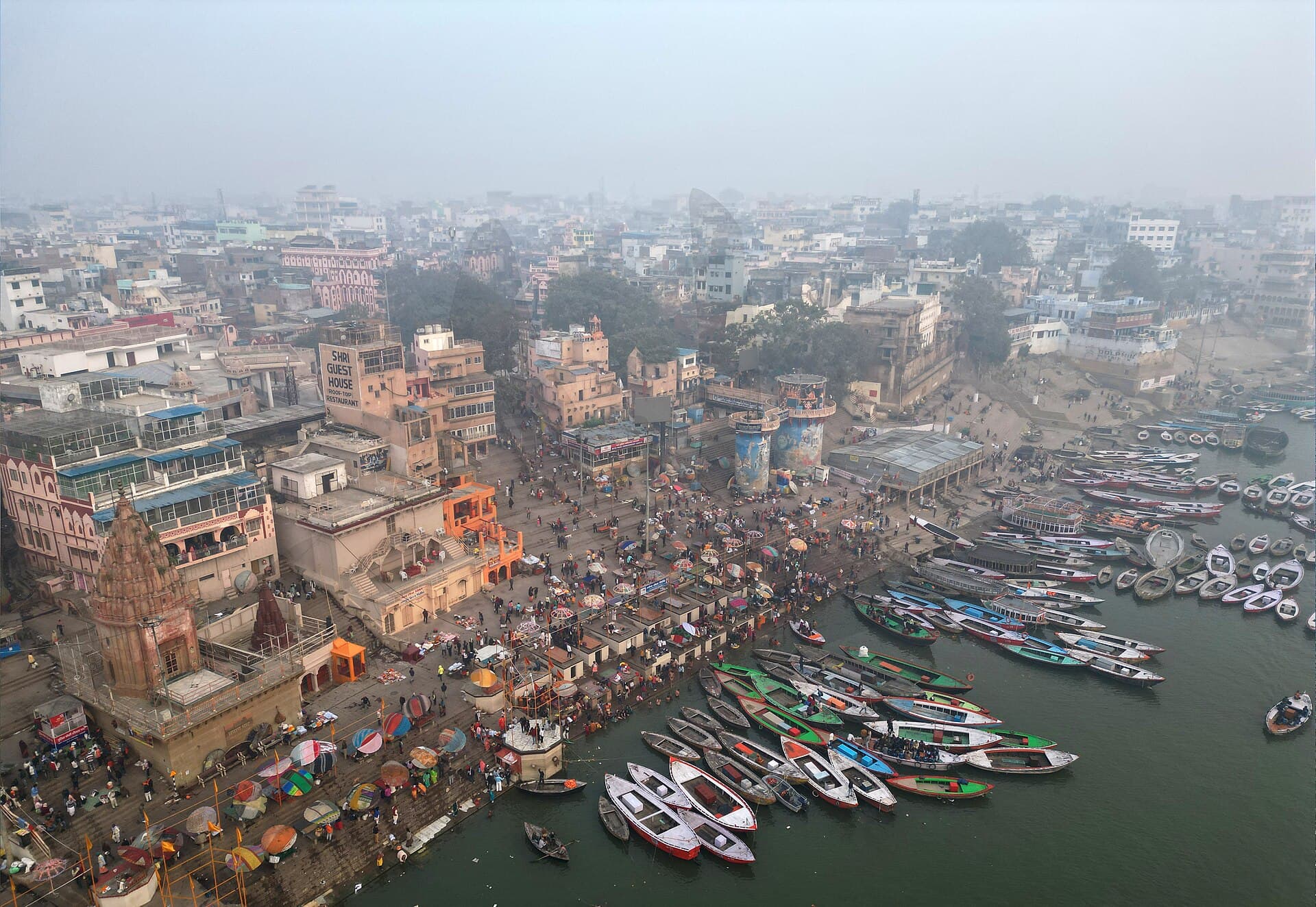
The light at Assi Ghat at five in the morning is almost blue. The river is glass-flat. A boat is pulled up onto the steps and a boatman is squatting beside it, arranging cushions for the first tourists of the day. Above, on the flat paved area, a yoga class is beginning; a hundred people in loose rows are already moving through the first rounds of pranayama.
If you walk north from Assi — past Tulsi Ghat, Janaki Ghat, Shivala Ghat, Chet Singh Ghat — the city slowly wakes. At Kedar Ghat, pilgrims from the south are bathing in rows. At Raja Ghat, a family is performing a pind-daan, the offering for a recently deceased parent. At Dashashwamedh, by six, the first round of flower-sellers has set up their small platforms, and the tourist boats are negotiating with their customers for the morning aarti.
Varanasi has seventy-eight ghats. Each has a name, a history, and a present-day character. Assi is university-area, yoga-heavy, full of Westerners and a younger Indian crowd. Dashashwamedh is municipal and high-traffic. Manikarnika is for cremation. Scindia, Darbhanga, Munshi — these belong to particular families or former kingdoms whose name they still carry. The ghats run north for several kilometres before the city thins out into the more agrarian stretch that ends, eventually, at Raj Ghat.
What walks with you is not the water but the labour that makes the ghats liveable. Sweepers, priests, boatmen, flower-sellers, tea-stall owners, masseurs, cremation workers, sadhus, police constables. Varanasi is in many descriptions a spiritual city, and that is not wrong — but at first light, it is a working city. The sacred and the practical are interwoven closely enough that most people here have stopped drawing the line.
By eight, the first tourists have finished their boat rides. The yoga class at Assi has ended. The sun is high enough that the marble glare of the burning ghats is visible from a long way off. The river doesn't change. The city around it — its noise, its heat, its argument with itself — begins.
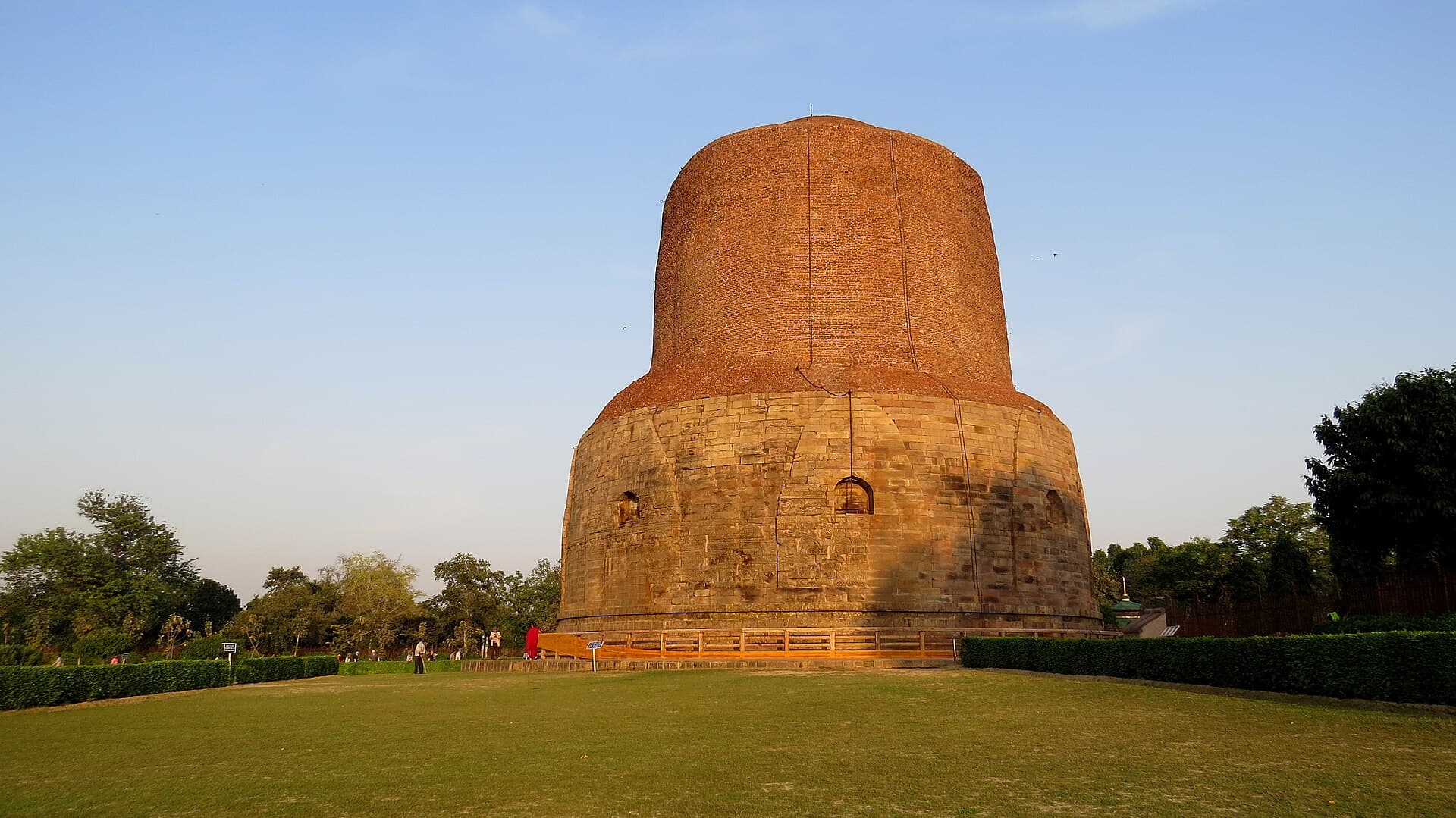
Sarnath: The First Turning
The Dhamek Stupa, Ashokan remains, and the modern-day monasteries of Sarnath — a visitor's guide that takes the site on its own terms.

Jaunpur: Mosques and the Sharqi Century
Atala, Jama, and Lal Darwaza — the three great Sharqi mosques of Jaunpur, and a short history of the Sultanate that produced them.