
Jaunpur: Mosques and the Sharqi Century
For a century and a half, a small eastern city was an architectural capital. Its mosques still stand — and their style has no real successors.


The Sharqi Sultanate is one of the less-known of India's medieval kingdoms. It was founded in 1394 by Malik Sarwar, a eunuch courtier of Firoz Shah Tughlaq, and lasted until 1479, when it was absorbed back into the Delhi Sultanate under the Lodis. For those eighty-five years, its capital was Jaunpur, a modest town on the Gomti river some sixty kilometres north-east of Varanasi.
What the Sharqi court produced, particularly under the rule of Ibrahim Shah (1401–1440), was a distinctive architectural style. The mosques they built — the Atala Masjid (1408), the Jama Masjid (completed around 1470), and the smaller Lal Darwaza Masjid (c. 1450) — share a signature feature: a massive propylon facade at the centre of the eastern prayer wall, dwarfing the smaller arched bays on either side. Nothing quite like it exists elsewhere in India. Architectural historians have argued for decades about where the form came from; proposals range from Tughlaq antecedents to direct influence from Timurid Central Asia.
What is certain is that the Sharqi mosque stood apart. It was never widely copied, and after the Sultanate fell it did not continue as a living tradition. Babur, passing through Jaunpur in 1529, noted the mosques; his grandson Akbar's architects absorbed some features but abandoned the scale.
Today the three main mosques are all in active use, though heavily restored in places. The Atala Masjid, the oldest, stands on a slight rise just north of the old town. The Jama Masjid, the largest, has a raised plinth reached by a steep staircase. The Lal Darwaza, smaller and tucked into a residential neighbourhood, is perhaps the most atmospheric.
Beyond the mosques, Jaunpur has the Shahi Bridge over the Gomti (built in 1568–1574 under Akbar), a handful of tombs, and the substantial remains of the Sultanate-era Jaunpur Fort. A full tour of the town takes a day.
For anyone interested in the architectural history of north India, Jaunpur is essential and under-visited.
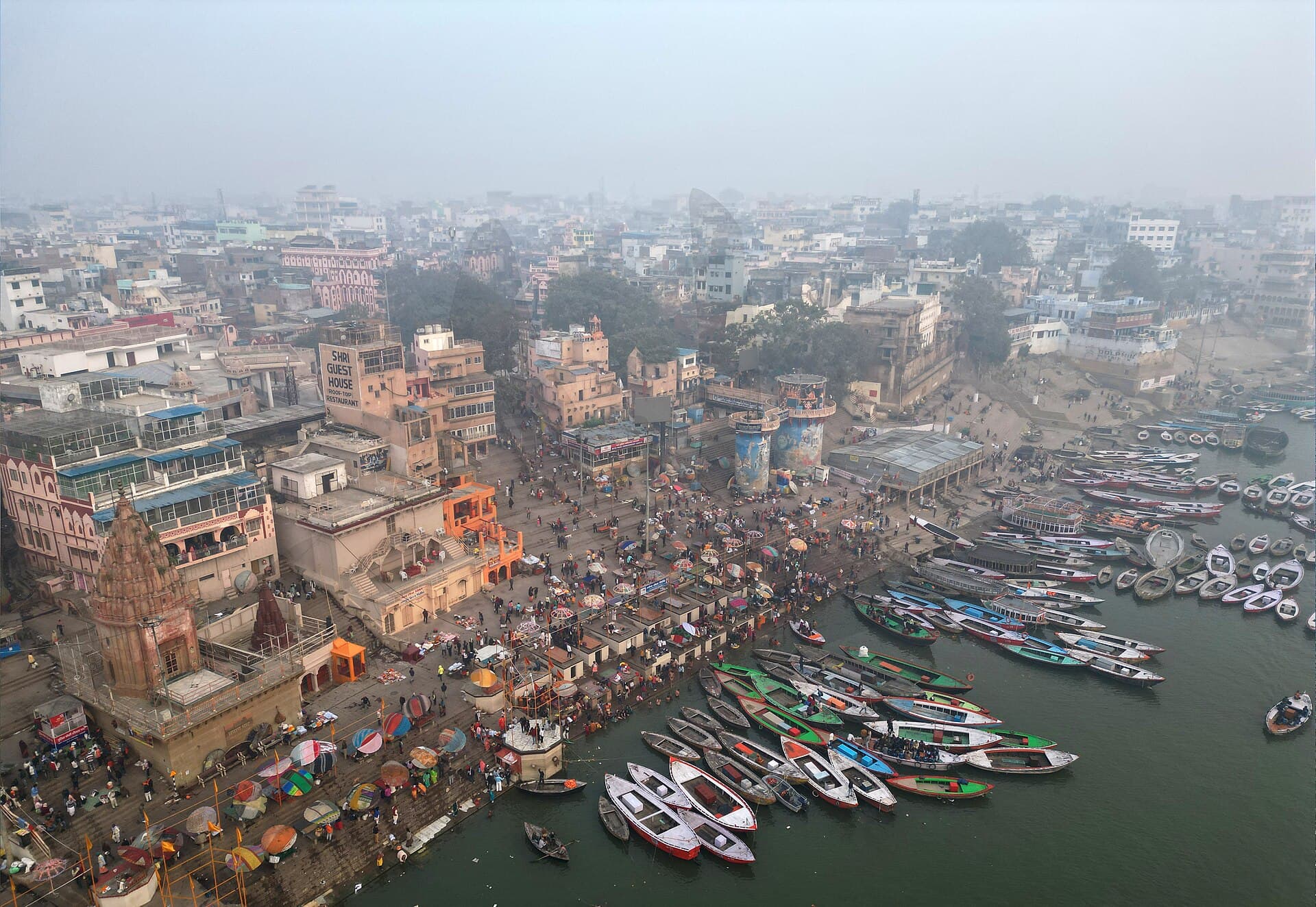
A Morning at the Ghats
A slow walk from Assi to Dashashwamedh at first light, with the boatmen, bathers, yoga teachers, and sweepers who make a Varanasi morning.
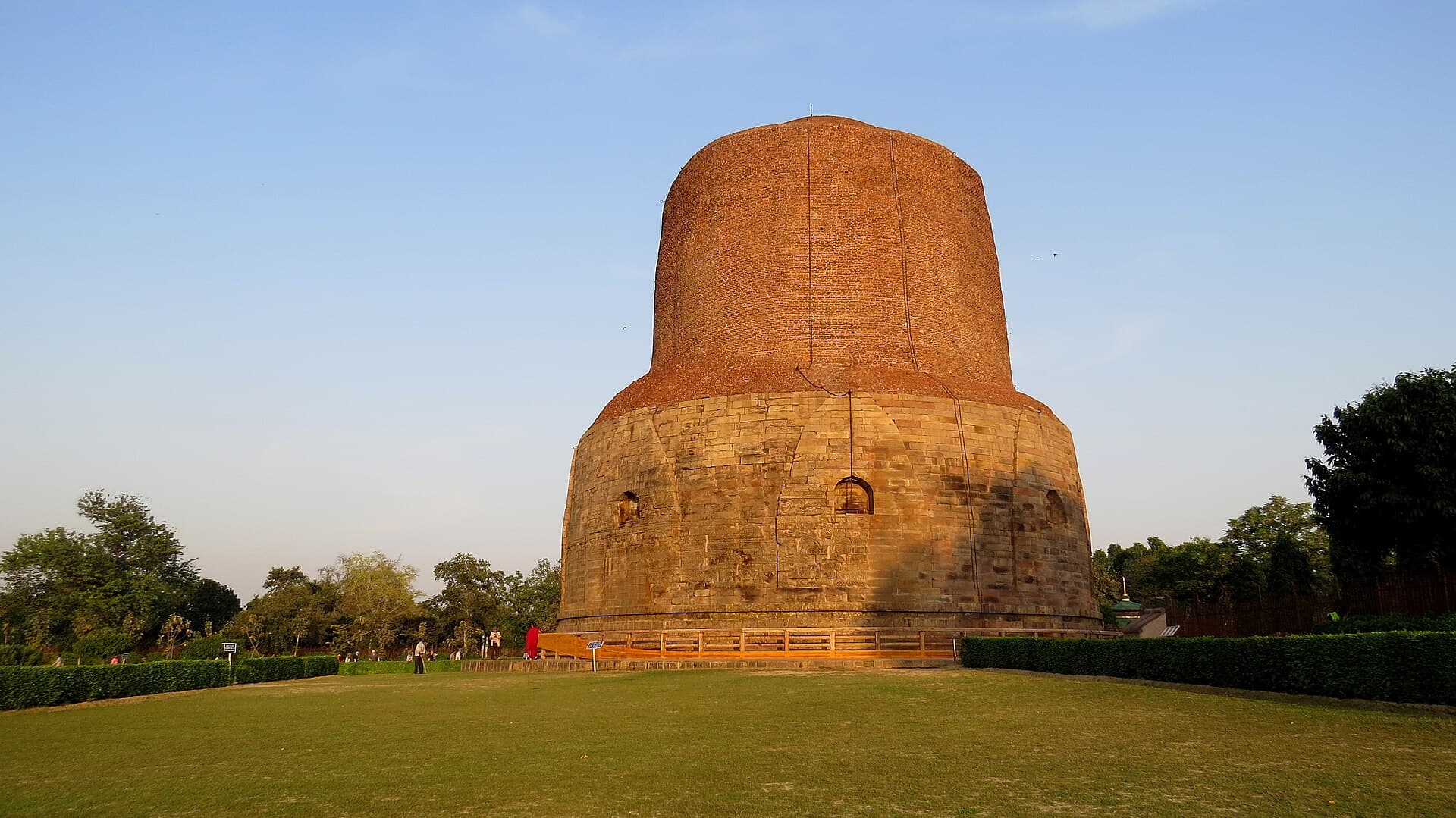
Sarnath: The First Turning
The Dhamek Stupa, Ashokan remains, and the modern-day monasteries of Sarnath — a visitor's guide that takes the site on its own terms.