
Sarnath: The First Turning
Ten kilometres from Varanasi, the Dhamek Stupa marks the place where the Buddha is said to have first taught. A visitor's guide to the archaeological park and the present-day monasteries that surround it.

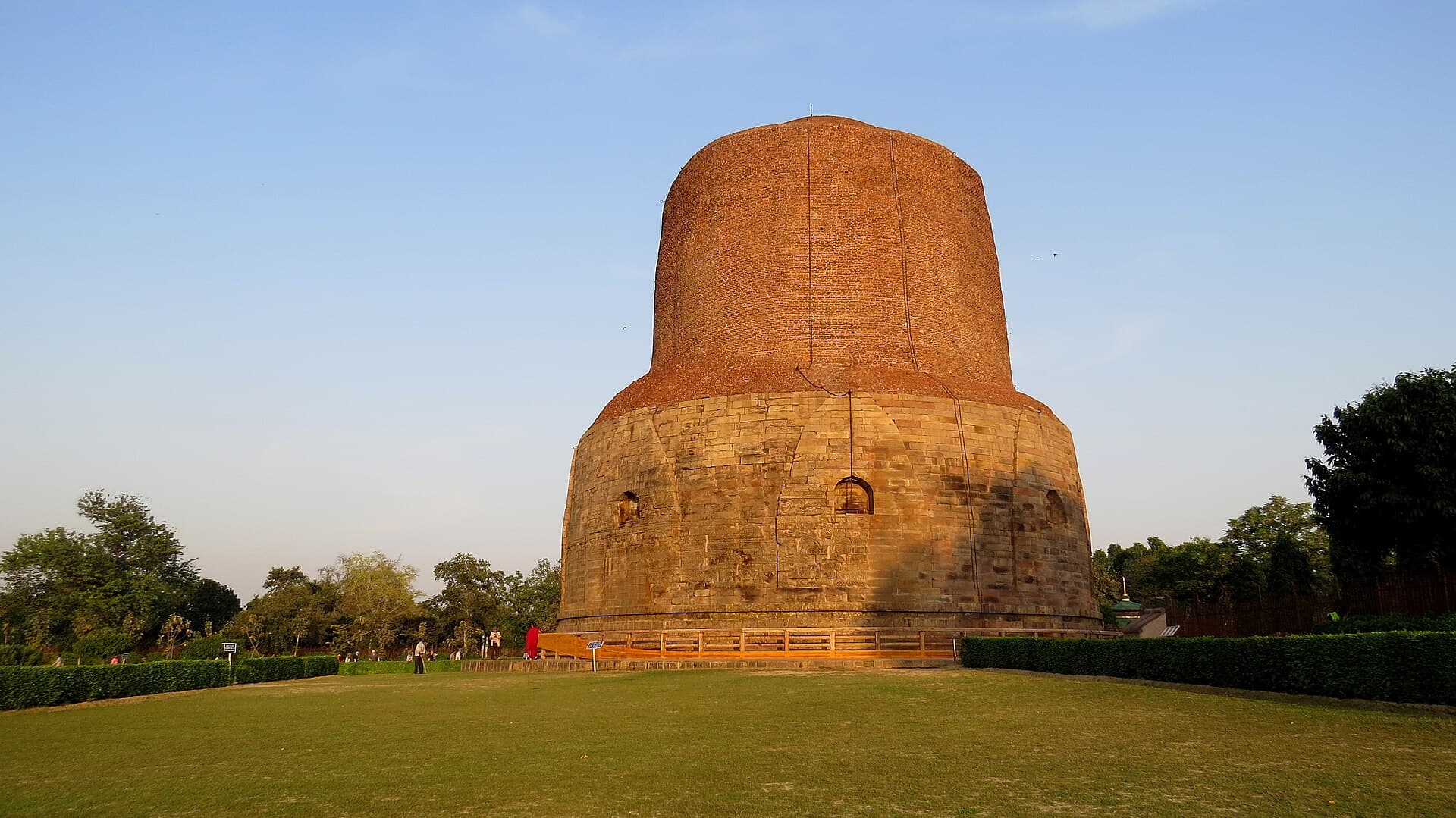
Ten kilometres north-east of Varanasi, the Dhamek Stupa rises in a quiet archaeological park. The stupa is not one of the famously ornate sites of ancient India — no Sanchi-scale narrative carving, no grand gateways — but it marks, by long tradition, the Deer Park where the Buddha gave his first sermon after his enlightenment at Bodh Gaya.
That sermon, the Dhammachakka-ppavattana Sutta (the Turning of the Wheel of Dhamma), is one of the foundational texts of Buddhism. Sarnath was, for many centuries, a major monastic and scholarly centre. The site that visitors see today dates mostly from the Gupta period onwards — the Dhamek Stupa in its current form is likely fifth-century CE, built over an earlier Mauryan stupa — but stone fragments from the time of Ashoka (third century BCE) survive nearby, including parts of the famous Ashokan pillar whose four-lion capital is now the emblem of the Republic of India.
The park is walkable in under an hour. Beyond the stupa and the ruins of the ancient monasteries, the Archaeological Museum at Sarnath holds a small but exceptional collection of Buddhist sculpture. The Ashokan lion capital is displayed here. The hall is usually quiet.
What has changed Sarnath in the last century is the return of living Buddhism to the site. In the 1890s, the Sri Lankan monk and scholar Anagarika Dharmapala began the restoration of Sarnath as a place of active Buddhist practice; the Mulagandhakuti Vihara, built in 1931 and decorated with frescoes by the Japanese artist Kosetsu Nosu, dates from this revival. Since then, Buddhist communities from Thailand, Japan, Tibet, Burma, Vietnam, and China have built monasteries around the archaeological park. A walk through Sarnath in 2026 is as much a walk through contemporary Asian Buddhism as it is through ancient Indian history.
The best time to visit is early morning or late afternoon, when the light lies low on the stonework. A bus or a taxi from Varanasi takes around half an hour. A chai stall outside the museum gate will still have seats.
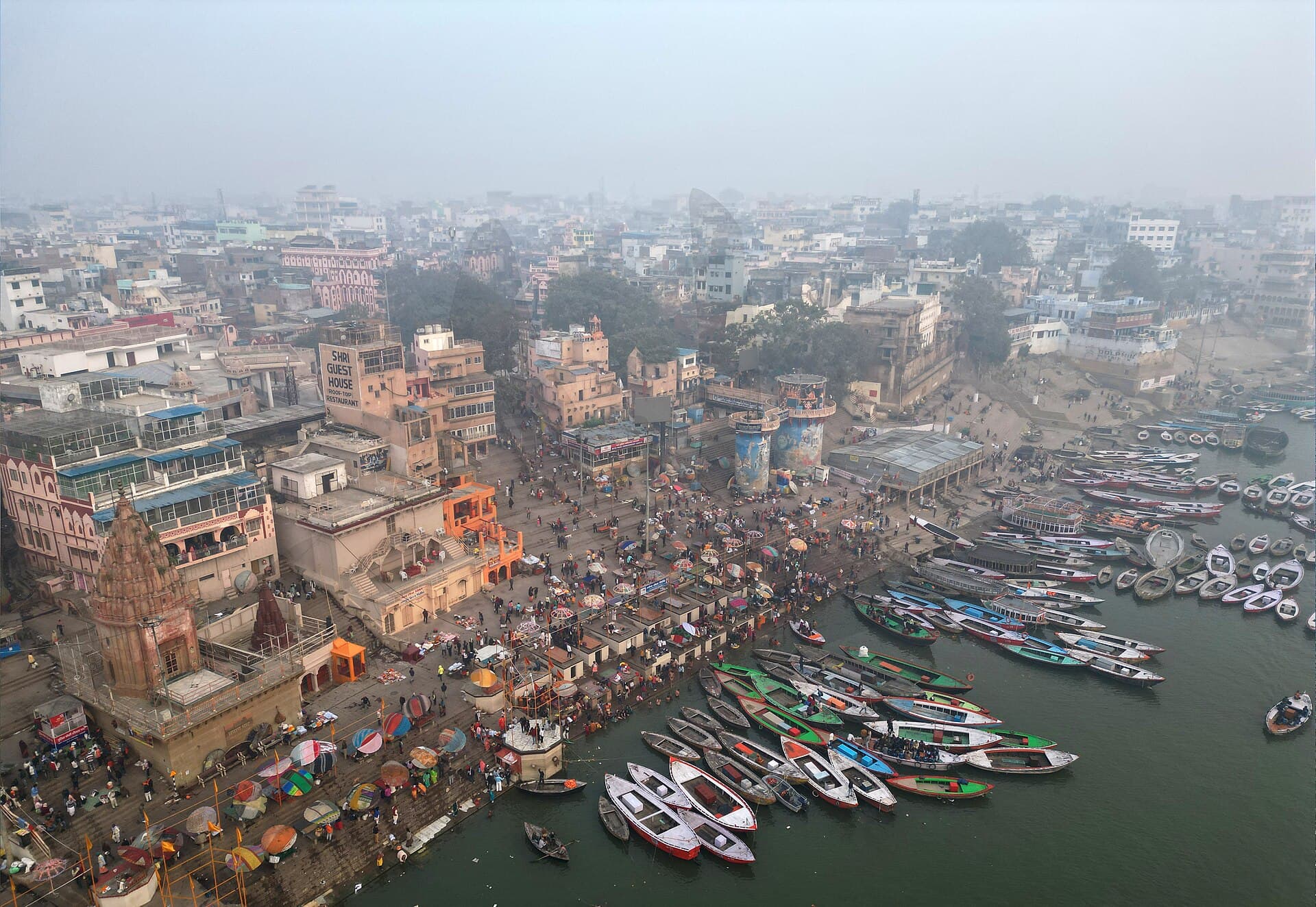
A Morning at the Ghats
A slow walk from Assi to Dashashwamedh at first light, with the boatmen, bathers, yoga teachers, and sweepers who make a Varanasi morning.

Jaunpur: Mosques and the Sharqi Century
Atala, Jama, and Lal Darwaza — the three great Sharqi mosques of Jaunpur, and a short history of the Sultanate that produced them.