
Dev Deepawali on the Ghats
On Kartik Poornima, the ghats of Varanasi are lit with tens of thousands of clay lamps. A night-long walk from Assi to Raj Ghat, with the families who keep the tradition.

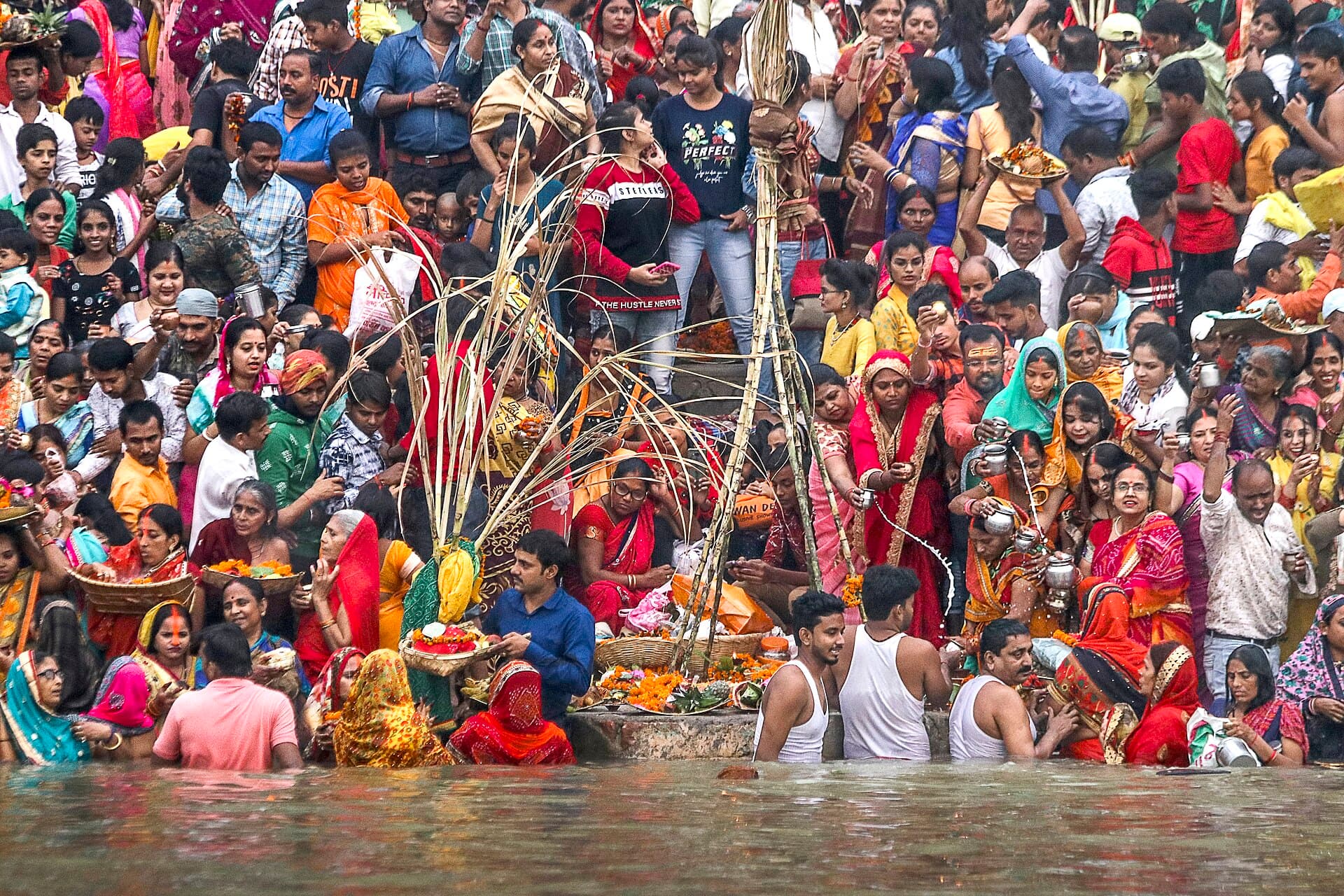
By late afternoon on Kartik Poornima, the ghats of Varanasi begin to change. The day's bathing crowd has thinned. Vendors pack up the last of the chai. Young men from the ghat committees set out long bamboo poles, tie them into a waist-high grid along each step, and begin to place the diyas.
There are thousands. They come out of cardboard boxes stacked along the wall, each filled with small clay cups and coils of wick. Women from nearby families fill the cups with mustard oil from steel cans. The work is unhurried and matter-of-fact; it looks less like preparation for a festival than like setting the table for a large meal.
Dev Deepawali — the Diwali of the gods — is observed fifteen days after the better-known festival. It falls on the full moon of Kartik, the Hindu month in which devotional observance intensifies across much of north India. The origin stories are several: Shiva's defeat of the demon Tripurasura, the descent of the gods to the city to celebrate, the fulfilment of vows taken earlier in the month. None of the families we spoke with placed much weight on any single version. “It is just that the whole city becomes light,” a woman at Pandey Ghat told us, filling diyas. “That is enough.”
By six in the evening, the ghats from Assi in the south to Raj Ghat in the north are a single unbroken stretch of flame. From a boat on the river, the city appears folded along a long burning seam. Tourists crowd the Dashashwamedh stretch; locals walk the quieter ghats north of Manikarnika, where the diyas are placed by hand on the steep stone steps and the whole effect is less organised, more intimate.
What is new about Dev Deepawali as a public spectacle is its scale. Older residents remember a smaller, more private festival — a few hundred diyas per ghat, placed by the families that historically managed each one. In the last two decades, municipal funding and sponsorship have pushed the number into the tens of thousands, and drone photographs have made the night globally recognisable.
Not everyone welcomes the change. A priest at Scindia Ghat spoke to us about the crowds, the aerial photography, the sense that the night is now being performed for a lens. “There is still devotion here,” he said, “but you have to look for it now.”
We looked. We found it in the smaller lanes behind the ghats, where families who don't come down to the river do their own puja at home with a single row of diyas on the threshold. We found it in the quiet moments between the arati and the tourist boats, when a grandmother placed a diya for a relative who had died that year. We found it in the boatmen, who spend the night rowing pilgrims up and down the river and who have been doing this for generations. The spectacle is real. It is also made from ordinary hands.
- Interviews with ghat committee members at Pandey and Scindia Ghats, Nov 2024
- Varanasi Development Authority public programme, Dev Deepawali 2024
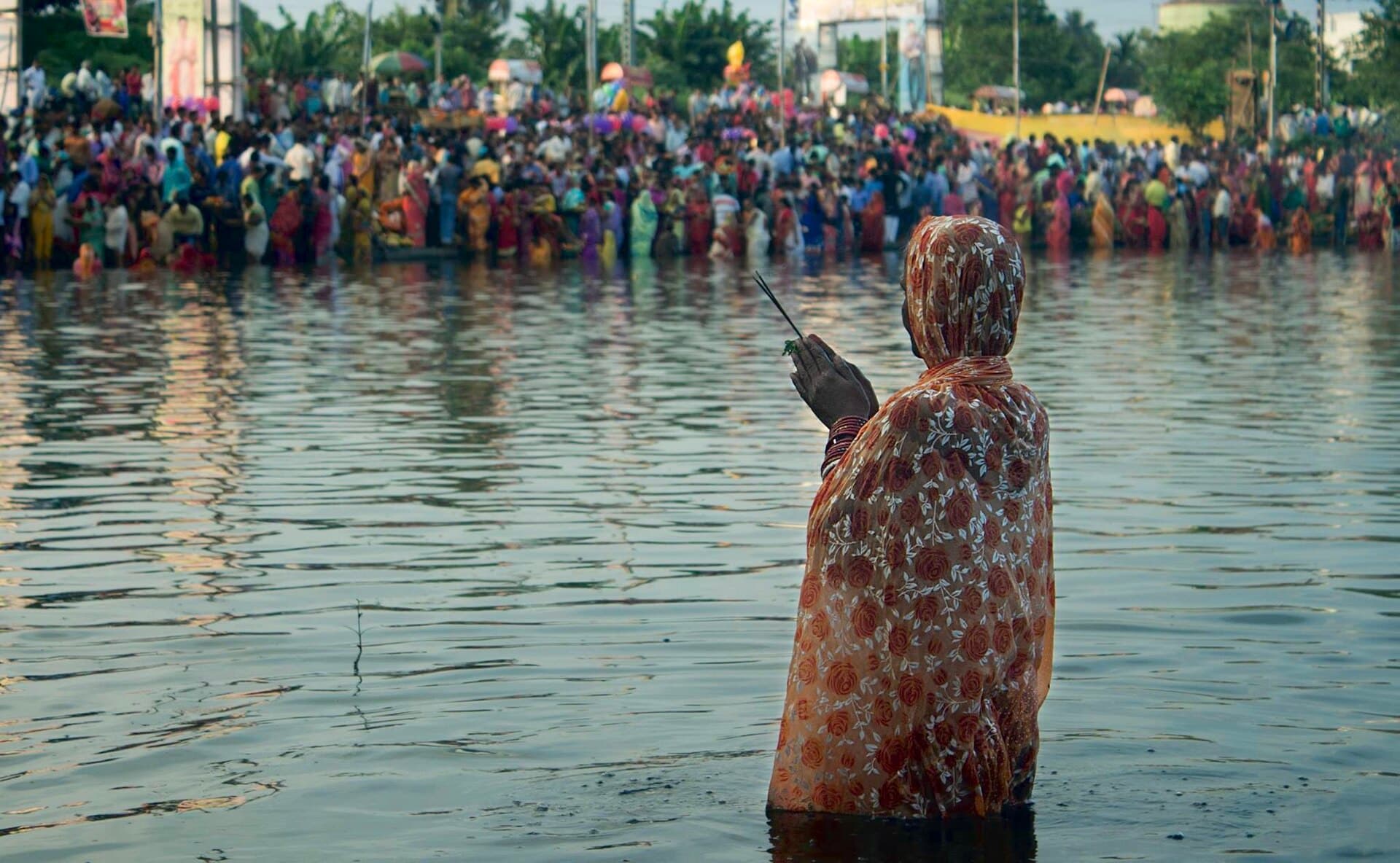
Chhath at the Waterline
Chhath draws whole streets to the water at sunrise and sunset. A report from two neighbourhoods — one in Varanasi, one in Ballia — and the women who keep the vow.